- +86 15632861133
- sales@joesco.cn
- Monday - Sunday 9.00 - 18.00

Modern construction and landscaping projects face constant pressure to reduce cost, improve durability, and shorten installation time. Traditional concrete structures often fail under ground movement, water pressure, and long-term weather exposure. Cracking, high maintenance cost, and poor drainage are common issues. gabion mesh provides a practical alternative that solves these engineering challenges while also supporting modern landscape design requirements.
gabion mesh is a high-strength steel wire mesh used to form stone-filled structures such as gabion, gabion basket, gabion box, gabion cage, and gabion wall.
In engineering practice, it works as a modular containment system. Stones are placed inside the mesh to form flexible gravity structures. These systems are widely used in slope protection, river control, retaining structures, and architectural landscaping.
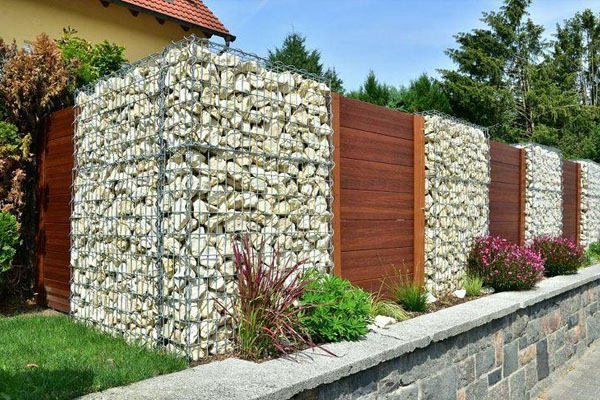
Modern welded gabion systems are especially popular in design-focused projects, including decorative gabion wall, garden gabion wall, and outdoor gabion furniture, because they provide clean geometry and strong visual structure.
gabion refers to the general system of wire mesh containers filled with stone. It is widely used in civil engineering, erosion control, and infrastructure protection.
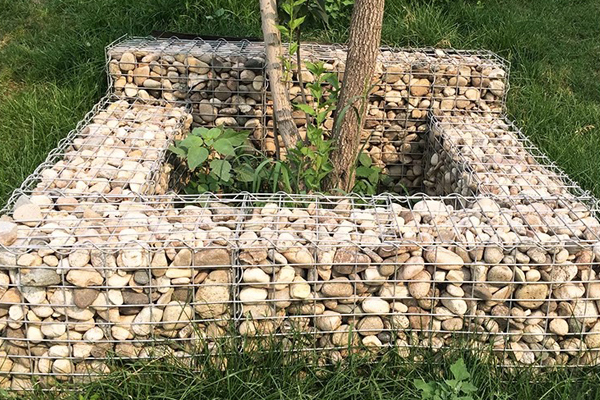
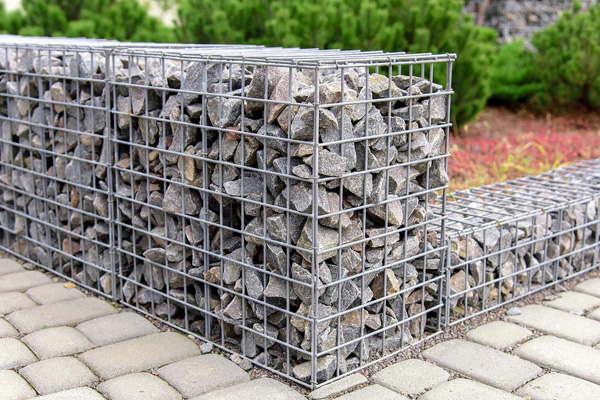
gabion box is a rectangular modular unit commonly used in retaining systems. It is widely applied in gabion retaining wall for landscaping projects due to its stability and stacking capability.
gabion basket is a flexible mesh container, often made using hexagonal gabion structure. It is widely used as landscape gabion basket and in gabion baskets for landscape design, especially in riverbanks and uneven terrain applications.
PVC-coated gabion mesh offers strong corrosion resistance. It is suitable for coastal areas, humid environments, and long-term outdoor exposure conditions.
PP (polypropylene) coating is used in special environments requiring chemical resistance and lightweight performance. It is less common but useful in specific industrial applications.
The key engineering advantage of gabion mesh is permeability. Unlike rigid concrete walls, gabion structures allow water to flow freely through the voids between stones. This reduces hydrostatic pressure and significantly improves long-term stability.
Another critical advantage is flexibility. Ground settlement and thermal expansion do not cause cracking because the structure can adjust naturally. This makes gabion systems ideal for unstable soil conditions.
From a construction efficiency perspective, installation is simple and does not require heavy machinery. Local stones can be used as filling material, reducing transportation costs and environmental impact.
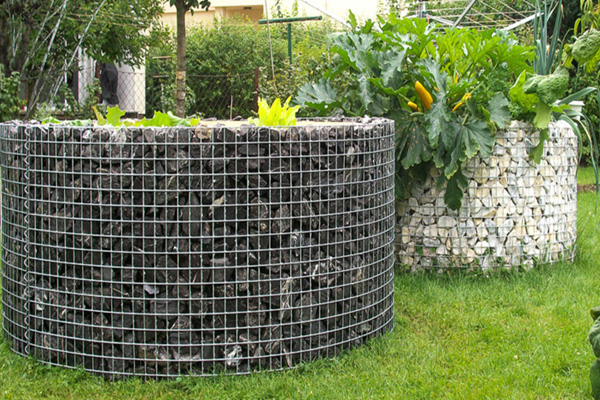
In landscape engineering, welded gabion basket for landscaping is widely used to build functional and decorative structures such as gabion planter, gabion fence, gabion seating, and custom decorative gabion boxes.
Applications like decorative gabion wall for garden and gabion planters for outdoor garden are increasingly popular in modern architectural design because they combine functionality with natural aesthetics.
Selecting the correct gabion mesh depends on engineering and environmental requirements:
Application type: Structural projects require stronger wire diameter and tighter mesh spacing. Decorative projects prioritize appearance and uniform structure.
Environmental conditions: Coastal or high humidity environments require PVC-coated mesh for corrosion resistance.
Load requirements: Retaining walls and slope protection require higher tensile strength materials.
Mesh structure: hexagonal gabion provides flexibility, while welded gabion provides rigidity and clean visual design.
Design purpose: Applications such as outdoor gabion furniture require both structural stability and aesthetic consistency.
Fine soil particles can gradually fill void spaces inside the structure, reducing drainage capacity. Proper stone grading helps maintain permeability.
Mineral deposits may form in water-exposed environments. This mainly affects surface appearance rather than structural performance.
Long-term exposure to UV radiation and weather conditions may degrade protective coatings. High-quality galvanization and PVC coating significantly extend service life.
gabion mesh systems require minimal maintenance, but periodic inspection improves long-term performance:
- Inspect wire mesh for corrosion or damage
- Check structural stability after heavy rainfall or soil movement
- Ensure proper drainage paths remain open
- Remove excessive vegetation growth
- Repair or replace damaged sections promptly
Case 1: River Protection Project in Southeast Asia
A large-scale riverbank stabilization project used gabion baskets to control erosion during seasonal flooding. The permeability of the system reduced water pressure and improved slope stability over time.
Case 2: Highway Slope Protection in Middle East
A desert highway project used gabion box structures for slope reinforcement. The system successfully resisted wind erosion and temperature variation without structural failure.
Case 3: Urban Landscape Development in East Asia
A city park project used welded gabion systems to create garden gabion wall, seating structures, and decorative installations. The project achieved both functional support and modern architectural appearance.
gabion mesh is a highly efficient engineering solution that combines structural stability, flexibility, and cost-effectiveness. It is widely used in civil engineering, environmental protection, and modern landscape design.
By selecting the correct mesh type and coating material, engineers and buyers can achieve long-term performance with minimal maintenance requirements.
Because it provides drainage, flexibility, and strong structural stability under different environmental conditions.
Yes, it is widely used for decorative and functional landscape structures such as walls, seating, and planters.
Depending on material quality and environment, it can last 10 to 30 years or more.
Welded gabion provides rigidity and clean appearance, while hexagonal gabion offers higher flexibility for uneven terrain.
Yes, it allows natural drainage and can support vegetation growth, making it suitable for sustainable construction.
Access useful technical content and industry-related information here
IntroductionModern constructio
Read More